
During the 2024-2025 admissions cycle, Yale boasted an acceptance rate of 3.87%. Obviously, that is a small number, but it’s only one statistic in the grand scheme of things. At top-tier schools like Yale, there’s a lot more data out there that can give us insights into how they run admissions, and thankfully for you, we dive into it every year.
The was created as a standardized way for schools to release the kind of data that helps them rise in the ranks on the US News & World Report and provide accurate statistics to College Board, among others. Yale fills out their CDS every year (unlike some colleges), which means we have the opportunity to break down these numbers for you. There are 10 sections of the CDS, but today we’re focusing on just one part of – Section C: First-Time, First-Year Admission.
C1: First-Time, First-Year Admission, Applications
If you’re looking for the headline numbers, this section is it. This is about the pure admissions numbers. In the Fall of 2024, 57,517 students applied to Yale, and 2,227 were accepted. Yale breaks this down by gender, but not by in-state, out-of-state, and international – which some schools do fill out.
| First-Time, First-Year Applicants | Total | Admitted | Acceptance % | Enrolled % | Yield % |
|---|---|---|---|---|---|
| Men | 24,951 | 1,136 | 4.55% | 782 | 68.8% |
| Women | 32,540 | 1,091 | 3.35% | 772 | 70.8% |
| Another Gender | 20 | 0 | 0% | n/a | n/a |
| # Applicants | # Accepted | Acceptance % | # Enrolled | Yield % |
|---|---|---|---|---|
| 57,491 | 2,227 | 3.87% | 1,554 | 69.8% |
Compared to the 2023-2024 data set, Yale had 51,803 applicants (almost 6,000 less), accepted 2,332 students (almost 100 more), and had an acceptance rate of 4.5%. What does this mean? Well, Yale, like most colleges, is seeing “a record number of applicants� almost every year, which they love seeing. More applicants means a bigger demoninator, which in turn means more rejections – which means they get to look even more exclusive than we all already knew they were.
Yale ended their test-optional policy for the 2024-2025 admissions cycle, but it’s now something called “Test-Flexible.� This means that instead of just SAT or ACT, students can submit AP or IB scores instead. This new path theoretically increases access for students who otherwise might not want to submit formal standardized test scores, which might be part of the reason their admissions numbers went up this season.
This trend will continue across the Ivy League and the Top 20 schools overall. Dartmouth and Harvard are among the schools that’ve brought back test scores for some interesting reasons. Did you know there are now studies that show high standardized test scores (even relatively compared to your high school) are the most significant predictor of college success? Makes sense that schools are now ditching test-optional now that the first students to be admitted without scores are now graduating.
C2: First-Time, First-Year Wait-Listed Students
One stat that Yale releases that a lot of other schools »å´Ç²Ô’t is their waitlist data. In the Fall of 2024, 773 students were offered a place on the waitlist, and 565 of those students accepted their waitlist spot. Out of those, 23 were admitted. That gives the waitlist a 4% acceptance rate – slightly higher than outright admission.
| Waiting List | Total |
|---|---|
| # of applicants offered a waitlist spot | 773 |
| # of applicants accepting a waitlist spot | 565 |
| # of applicants admitted from waitlist | 23 |
We like that they release this data because it gives students a clearer picture of their odds, and those are odds we would not bet on. There is a 4.07% chance you will get in off the waitlist. However, we see students get into Yale off the waitlist every year (with our help, of course), but we’ve also seen students not accept spots at universities they were accepted to because they’re holding out hope for Yale. That’s not a great idea, and these waitlist numbers prove it.
C9-C12: First-Time, First-Year Profile, or Scores and Grades
Now, let’s get into test scores. This is one of the more interesting parts of Yale’s CDS, especially considering they’re still technically test-optional. For students enrolled in the Fall of 2024, 86% submitted test scores. That means you should also submit test scores if you’d like to be competitive. For the record, all of our students who apply and get into Yale submit test scores.
| Percent | Number | |
|---|---|---|
| Submitting SAT Scores | 61% | 950 |
| Submitting ACT Scores | 25% | 384 |
| Assessment | 25th Percentile | 50th Percentile | 75th Percentile |
|---|---|---|---|
| SAT Composite | 1480 | 1530 | 1560 |
| SAT R+W | 730 | 760 | 780 |
| SAT Math | 740 | 780 | 790 |
| ACT Composite | 33 | 34 | 35 |
| ACT Math | 31 | 34 | 35 |
| ACT English | 34 | 35 | 36 |
Before we break down the numbers, let’s get serious about what you actually need to get into Yale. We advise our clients to get a 1550+ on the SAT or a 35+ on the ACT to be a competitive applicant. Getting these scores doesn’t guarantee anything, but not having them is placing you squarely in a low probability zone. You will see students who do not hit that benchmark in the numbers below – that does not apply to you. You, yes you reading this, need to have super high scores. In order to be truly competitive, you need to make sure you’re at the highest end of the bracket. Below we’ve broken down Yale’s test score ranges.
| Score Range | SAT Reading and Writing | SAT Math |
|---|---|---|
| 700-800 | 87.99% | 88.1% |
| 600-699 | 10.53% | 10.2% |
| 500-599 | 1.47% | 1.7% |
| 400-499 | 0.11% | 0.0% |
| Score Range | SAT Composite |
|---|---|
| 1400-1600 | 88.7% |
| 1200-1399 | 9.9% |
| 1000-1199 | 1.4% |
If you aren’t rocking a 4.0 (more on that in the next section) and next-to-perfect test scores, then Yale is going to be even more of a reach than it already is for literally everyone who have perfect grades and scores. We »å´Ç²Ô’t say this to scare you or put you off aiming high, but we believe in being pragmatic and realistic. Also maybe you should be a little scared?
While we love helping students write great essays, our favorite part of the process is helping match students with the right schools for them. You might be entranced by the brand name, but is that brand name going to help you with your passions and goals?
Withheld Statistics
An annoying omission by Yale is their GPA stats:
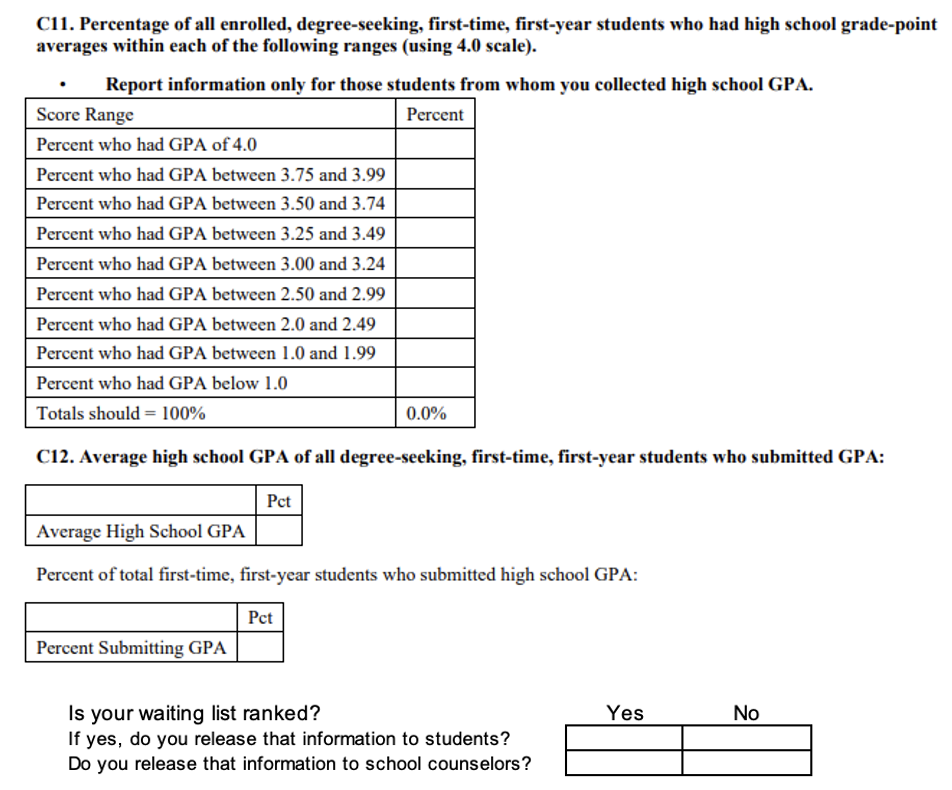
Sick. No numbers here. Really cool stuff, guys. We expect better from you going forward. A lack of data leads to a lack of clarity with decision making.
However, despite these numbers being withheld, we can tell you that the higher your GPA, the better. The best chance at admission will always be an unweighted 4.0. Now, why would they exclude this information? Great question, and if we had to speculate, it could be that they might accept a higher percentage (but not a HIGH percentage) of lower GPAs than their peer institutions, and they »å´Ç²Ô’t want the youth getting the wrong idea. And they »å´Ç²Ô’t want to look bad. They also just might not want to, in general. If it is because of lower stats, you should not read into that – just like you shouldn’t read into the scarce bad test score numbers. Those students could be legacy or athletes. Heck, they could be kids from rural Appalachia or refugees. You »å´Ç²Ô’t know, and you shouldn’t think those exceptions apply to you.
Yale also does not release early admissions statistics in their CDS, and they are not required to do so since they utilize restricted early action.
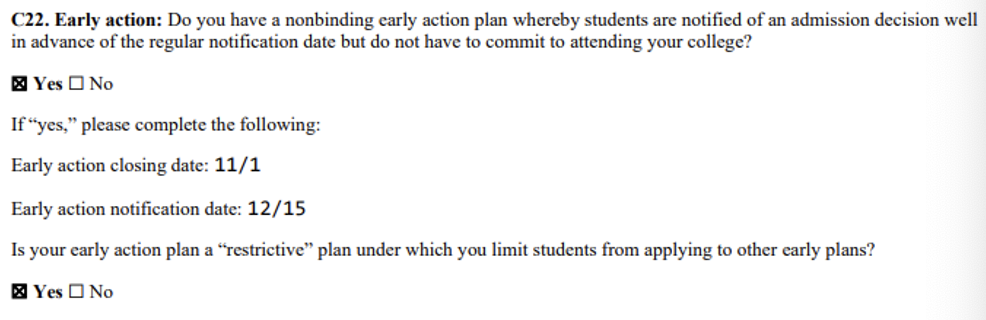
Annoying, but there’s not much we can do there.
yale admissions Considerations
Section C7 gives us a glimpse into what factors, especially those more subjective ones, Yale cares about.
| Academic | Very Important | Important | Considered | Not Considered |
|---|---|---|---|---|
| Rigor of classes | X | |||
| Class rank | X | |||
| GPA | X | |||
| Test scores | X | |||
| Essay | X | |||
| Recommendation | X |
| Non-academic | Very Important | Important | Considered | Not Considered |
|---|---|---|---|---|
| Interview | X | |||
| Extracurriculars | X | |||
| Talent/ability | X | |||
| Character | X | |||
| First-gen | X | |||
| Legacy Status | X | |||
| Geographical residence | X | |||
| State residence | X | |||
| Religious affiliation | X | |||
| Volunteer work | X | |||
| Work experience | X | |||
| Level of interest | X |
Makes sense that almost all of the academic factors are very important, and there’s nothing here that really shocks us. We will say that this list lacks a lot of nuance. Let’s start with interviews, for example. Yale will tell you that if you »å´Ç²Ô’t get an interview, it’s not held against you. In our experience, interviews have the chance to hurt you more than they can help you! So while it is “considered,â€� it’s really not a deciding factor for admissions.
Compare that to “Extracurriculars,â€� for example. What does that really mean? Because playing a sport and being a president of a club is not enough for Yale. The students we work with who get into Yale are doing things like building biomedical devices and publishing impressive research. If you want to go to Yale, you have to make sure your resume is up to snuff – and if you »å´Ç²Ô’t think it’s there yet, we can help you.
Conclusion
As you knew going into this post, Yale is a hard school to get into. Obviously! But, we believe in a data-driven approach™, and now that you’re armed with numbers, you can make the best strategic choices available.
It’s also important to know that this is just data. It doesn’t tell us about everything they value, what the mood of the admissions officer who reads your essay is, and it also doesn’t tell us about you. The best way to know if you’re a fit to Yale is to reach out to us – we can tell you if Yale is a smart strategic choice for you, if it matches with your goals, or help you find other schools where you’ll thrive.
One way to increase your odds? Working with college consultants who are experts in the field and have a high rate of success getting students into Yale. We help countless students gain admission to top universities every single year – reach out to us today to get started.