
Princeton. The name conjures up visions of its most famous alumni: Michelle Obama, Jeff Bezos, and, of course, 30 Rock own’s Jack Donaghy. It’s a famously hard school, and famously hard schools are famously, well, hard to get into. Princeton certainly attracts some of the most academically accomplished students in the world, but the admissions process is more nuanced than simply identifying who has the highest GPA or the most impressive resume.
Princeton is deeply intellectual, and it's also a place built around undergraduate education. Unlike many elite research universities, Princeton invests heavily in teaching undergraduates, enabling them to research early, mentoring students closely, and encouraging independent scholarship from an early stage. As a result, admissions officers are looking for students who are not only capable of succeeding academically, but who seem genuinely excited to learn.
So how does Princeton evaluate applicants? And what separates one highly qualified student from another? Let's take a closer look.
Who Actually Gets Into Princeton?
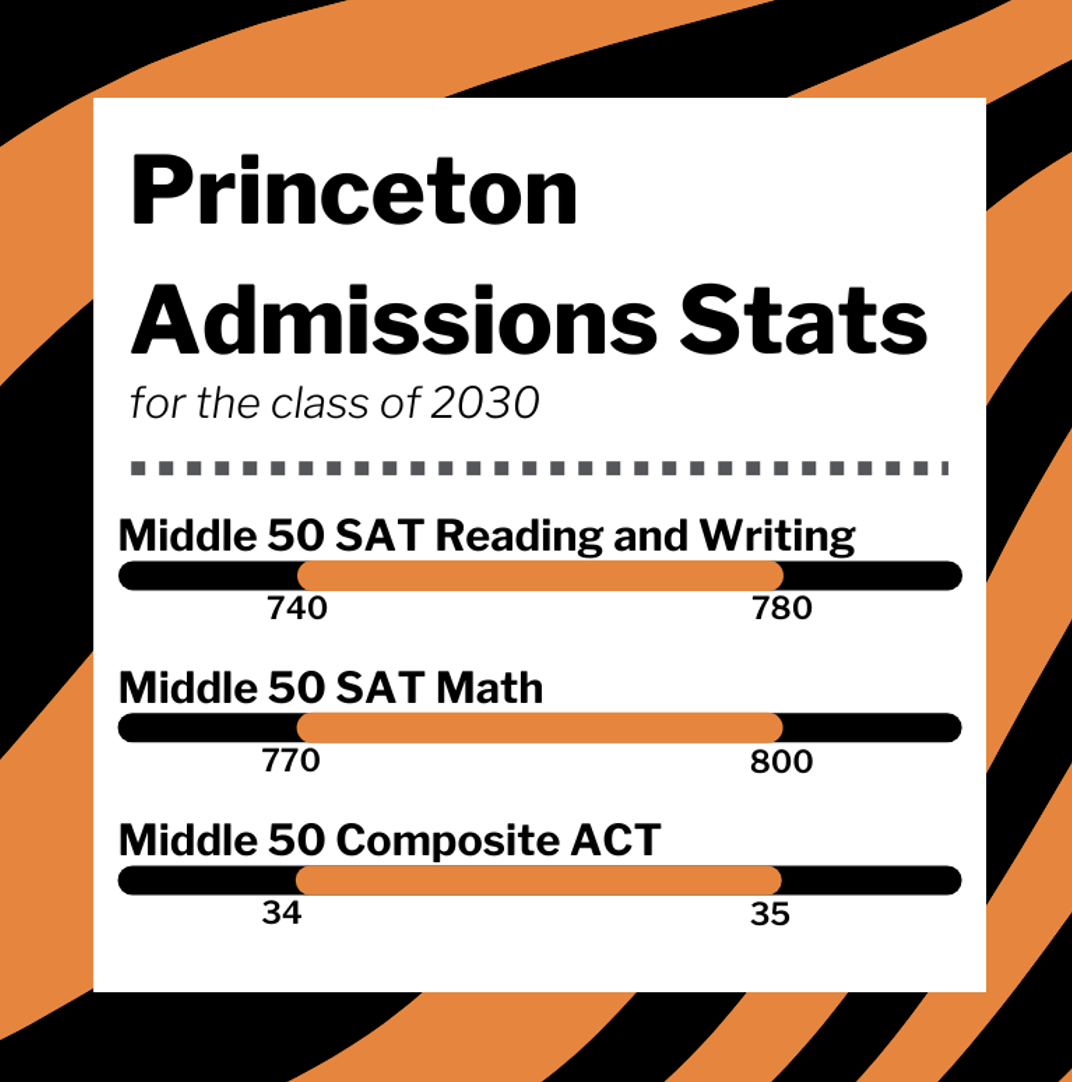
Let's get the obvious part out of the way first: Princeton's academic expectations are extraordinarily high. The vast majority of admitted students arrive with exceptional grades, a transcript full of hard classes, and test scores that place them near the very top of national applicant pools. Princeton has no shortage of these students applying – but here's the problem. So does everyone else applying.
Academics should be considered step 1 in this whoooole process. Without this piece of the puzzle, there is little to no chance you’ll progress further. Take a look at the GPAs of admitted and enrolled freshmen:
| GPA Range | % Submit with Scores |
|---|---|
| 4.0+ | 72.90% |
| 3.75-3.99 | 23.30% |
| 3.5-3.74 | 3% |
| 3.0-3.24 | 0.30% |
| 2.5-2.99 | 0% |
| Average HS GPA of All Applicants | % Who Submitted HS GPA |
|---|---|
| 3.95 | 99.30% |
The students who ultimately stand out tend to have applications that reveal a clear pattern of engaging in their passions, in addition to the stellar grades and scores they expect. Admitted students don’t just borrow from some college admissions checklist. Their applications tell a story about what they care about and how they've pursued those interests over time.
What Does Princeton Really Want to See?
A lot of applicants assume Princeton wants students who are good at everything. A jack of all trades, if you will. That's understandable. After all, when you're applying to one of the most selective universities in the world, it feels logical to demonstrate excellence across as many categories as possible. But, unlike you may have been told, “well-roundedness� isn’t all that important. Sure, they want you to have some other interests, but you need to have focus.
Princeton likes students whose interests have depth, who have explored something beyond the classroom, and have done something about it. Let’s do a thought experiment: imagine two applicants interested in public policy with the exact same grades and scores.
The first student has accumulated a long list of impressive activities: student government, Model UN, debate, leadership positions, and a few prestigious summer programs. It's a strong application, but much of it exists within traditional school structures. They also might have some random clubs, sports, and volunteer stuff that’s taken up a large percentage of their time in high school.
The second student became interested in housing policy after learning about rezoning in their district. That interest led to exploring zoning laws in their district, interning with their local representative and HUD, working on a statistical analysis of housing availability in their congressional district, and culminated in them writing a white paper about the impact of the rezone. That’s in addition to the student government, debate, Model UN, and summer programs.
Now, both students are impressive, but one is considerably more memorable.
Princeton tends to favor applicants who demonstrate real ownership of their interests. They want to see students who actively pursued questions, problems, or ideas because they were personally invested in them. This is especially important because undergrad research is a huge part of Princeton culture.
They want you to be the kind of person who enjoys asking questions that don't have obvious answers. Students who like digging deeper into topics, pursuing their own research, and following their interests outside of the school doors.
How Does Princeton Decide Who Gets in?
Unfortunately, there is no perfect formula. Students want admissions to work like a checklist Highest GPA? Check. Most activities? Check. Best test scores? Check. Welcome to Princeton. Hate to break it to ya, but that isn't how this works.
Princeton evaluates applicants “holistically,� which means every piece of the application informs every other piece. Academics matter enormously. So do essays, recommendations, extracurricular involvement, personal qualities, and context. However, holistically doesn’t mean subpar grades and scores are slipping through into the admit pile. It’s used to separate all the high-achievers from the kids who will thrive there.
For more specific insight into how Princeton does it, check out this video interview with a former Princeton Director of Admissions.
It’s also important to know context plays a significant role – a student who maximized opportunities in a rural public school may be evaluated differently than a student attending a highly resourced private institution. Those things you might not have control over. Here are the non-academic factors they look at:
| Nonacademic Factors | Very Important | Important | Considered | Not Considered |
|---|---|---|---|---|
| Interview | X | |||
| Extracurriculars | X | |||
| Talent/ability | X | |||
| Character | X | |||
| First-gen | X | |||
| Legacy status | X | |||
| Geographical residence | X | |||
| State residency | X | |||
| Religious affiliation | X | |||
| Volunteer work | X | |||
| Work experience | X | |||
| Level of interest | X |
Some students stand out through research, others through their creative work, leadership, public service, entrepreneurship, or niche academic specialization. They don’t want just one type of kid, but they do want kids who combine curiosity with action.
How Can I Get into Princeton?
You don’t need prestige, but you do need some intentionality.
Admissions officers should be able to read your application and understand why you've made the choices you've made. Like why you pursued certain activities, what specific academic interests matter to you, and how your experiences connect to one another. This doesn't mean every activity needs to fit into a perfectly curated narrative. Real people have multiple interests! But there should be some evidence that your application reflects your niche, rather than random participation meant to stuff a resume.
The essays become particularly important here. Princeton's supplemental essays are often designed to reveal how students think, what they value, and how they engage with the world around them. Students sometimes approach these essays as if they were marketing campaigns, trying to sound impossibly impressive, but that doesn’t work.
The strongest essays often feel thoughtful, reflective, and personal. Princeton already has access to your academic record. The essays help them understand the person behind those numbers. They also ask for a graded paper with notes – another supplement that speaks to your academic ability. Focus on the other parts of yourself for their essays.
Long-term planning matters! Most successful Princeton applicants did not build their profile during senior year. Their applications emerged through years of academic exploration, extracurricular development, mentorship, and intentional decision-making.
How Can 91̽»¨ Help?
A strong private college counselor can help create authentic passions and experienced guidance can absolutely help students recognize opportunities, strengthen their narrative, and avoid strategic mistakes that weaken otherwise strong applications.
At The Koppelman Group, we help students build applications that feel intentional, coherent, and genuinely reflect who they are and what they’re passionate about. We work with students to identify meaningful academic interests early and develop those interests strategically throughout high school. That might look like pursuing research opportunities, creating independent projects, developing leadership initiatives, strengthening extracurricular involvement, or identifying summer programs that support long-term goals.
We also help students navigate every stage of the admissions process, including Common App essay development, Princeton supplemental essays, high school course selection strategy, interview preparation, testing plans, and college list construction. Most importantly, we help students avoid the trap of trying to become what they think Princeton wants them to be.
Our goal is not to create a different student from what we’re presented with; it’s to take your interests and passions and turn them into a strategic plan.
Conclusion
Princeton admissions is competitive because Princeton is building a community of students who are academically exceptional, curious, deeply engaged, and excited to get their hands dirty. The applicants who stand out are rarely the ones chasing every possible resume line. They're the students who developed meaningful interests, pursued them with depth, and built applications that reflect genuine intellectual engagement.
Understanding what Princeton values won't guarantee admission, but it will help you approach the process more strategically. The goal is not to become someone else for admissions. It's to present the strongest, clearest, and most compelling version of who you already are.
Need help getting into a Top 20 school? Reach out to us today.