
Be honest, when you think of the Massachusetts Institute of Technology, is the first thing you think of Engineering? MIT actually offers majors in many pursuits, and not all of them are even STEM (yes, you can major in Music or Anthropology at MIT). However, the school is really known for its math and science programs, with engineering majors being among the most popular. We don’t have to tell you MIT is hard to get into, and if you are dreaming of getting accepted into the MIT School of Engineering, you need to be a highly competitive candidate. Last year, their acceptance rate was only To be an MIT-worthy candidate, you have to complete a couple of essential steps, and we are here to break them down for you.
Get the Grades
The first step to getting into MIT is to have competitive grades, aka a 4.0 unweighted or very close to it. For the 2023-2024 admission cycle, 97% of admitted students were in the top tenth of their graduating class. You need to be pushing yourself academically. Part of that is getting a 4.0, but another part is taking a hard class load. Your transcript should be full of Honors, IB, AP, Accelerated, and/or Dual Enrollment classes. While high-level math and science classes are a must for MIT candidates, impressive applicants will likely have higher-level courses in multiple subjects. Take as many challenging classes as you can while maintaining a high GPA.
MIT is no longer test-optional, meaning you will also need competitive test scores. Last year, their middle 50% was impressive.
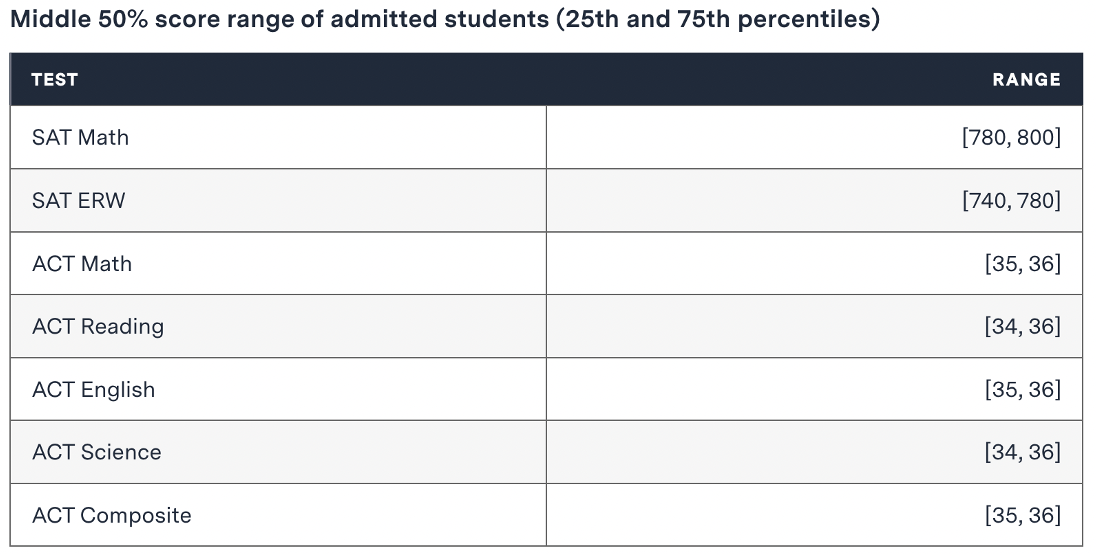
In all categories except SAT ERW, the 75th percentile was a perfect score, meaning that 25% or more of all admitted students had a perfect score. You need to be in this range to be a serious candidate.
Build a Niche
Just saying, “I want to study engineering� isn’t enough for MIT. First, it is far too general. Engineering is a big field; Biomedical Engineering is very different from Civil Engineering. Your interests should be clear, defined, and specific. Second, once you have your specific interest, you need a clear history of involvement in that area of study. This is your academic niche: a clear area of academic interest and a resume and knowledge base that backs up your passion for the subject. Building that clear academic niche and history takes time, and it can be a little hard to know where to start. However, there are a few steps you can take.
Courses and Reading
You need to learn as much as you can about your academic interests. A great first step is reading books. Before you say anything, yes, there are books about STEM subjects, and you don’t need to be a humanities major to read. At the risk of sounding old, honestly, many young people don’t read outside of class. However, they really should. Something as simple as reading books can help you stand out. Reading books about your academic interests will also make you better at writing and talking about your academic niche. Once you have started an impressive reading list, you can supplement it with podcasts, scientific journals, or anything else that helps you explore your field.
We also highly recommend taking some online classes outside of your school day. Many universities offer pre-taped (often free) courses through third parties like Coursera. This is a huge resource that can start building a history of academic exploration. You can also look for summer programs at universities or classes at community colleges to add to your academic history.
School Extracurriculars
Great candidates are involved in their school communities. However, don’t just sign up for a bunch of random clubs. Great applications tell a story. You should look for clubs that help support that story and build on your academic interests. Popular clubs for students interested in engineering include robotics teams, science Olympiads, mathletes, STEM tutoring clubs, solar car teams, computer science societies, etc.. If your school doesn’t offer clubs with a STEM focus or that fit with your specific niche, ask about starting one.
Just signing up for clubs isn’t enough for MIT. Just as you push yourself in your classes, you need to push yourself in clubs. Being on the robotics team is nice. Being the co-captain of the robotics team is better. Being the co-captain of a state competition-winning robotics team, now we are talking! Take on leadership roles and be ready to commit time and effort to your clubs. If you don’t, MIT might not be for you.
Out of School Extracurriculars
MIT-level students have impressive extracurriculars outside of the school year-round. However, summers are still extremely important for building an MIT-worthy resume. While many opportunities can make for great extracurriculars, MIT-level candidates will likely have a mix of research, internships, and academic programs during their summers. Getting involved in research (either with a personal project or by assisting a local professor) is especially important when looking at schools like MIT. Your out-of-school extracurriculars should also connect to your niche. We would always prefer a candidate who volunteers at a repair cafe over someone who job shadows at a bank but doesn’t want to pursue business. Choose the right opportunities to build a great application.
If you don’t know where to start, we can help. We often work with students as early as their freshman year to help them strategize and optimize their summers.
Build Something Cool
MIT’s admissions blog has a post called “� Two categories on this list are ‘hands-on creativity’ and ‘initiative.’ You can show you have those qualities by building something cool and related to what you want to study. MIT knows that engineering requires hands-on skills, so show off which ones you have or even better, challenge yourself to learn new skills. The sky is the limit here. We have worked with students who have built solar projects, drones, computers, and much more. Create or invent something you would be proud to tell MIT about.
Apply Early
Earlier, we said MIT had around a 4.5% acceptance rate last year. While that is technically correct, it isn’t the whole picture. This is an overall acceptance rate made out of their Early Acceptance and Regular Decision rates. During their Early Action round, they accepted around 5% of students. Their regular decision rate was more like 2.5%. If you are serious about getting into MIT and are a qualified candidate, applying early is your best chance at acceptance. So, rising seniors, it is time to work on your apps. Dates come up fast, and you should have a good strategy for applying early!
MIT is extremely competitive, especially in engineering. You need to make a plan if you hope to be a competitive candidate. It takes a lot of work, and if you are worried about where to start, we can help. We work with students from rising freshmen to college transfers to ensure they are great candidates and help with all things college.
Ready to take the first step? Reach out today!